

Start with the reality
Everyone talks about accuracy.
But in real work, what you deal with is uncertainty.
Even if your system is “accurate”, results can still vary.
That’s what uncertainty is about.
1. Don’t start with the machine
Most people try to fix uncertainty by adjusting the CMM.
In practice, the bigger impact often comes from:
- Calibration artifacts
- Setup
- Environment
If those are not stable, machine accuracy won’t help much.
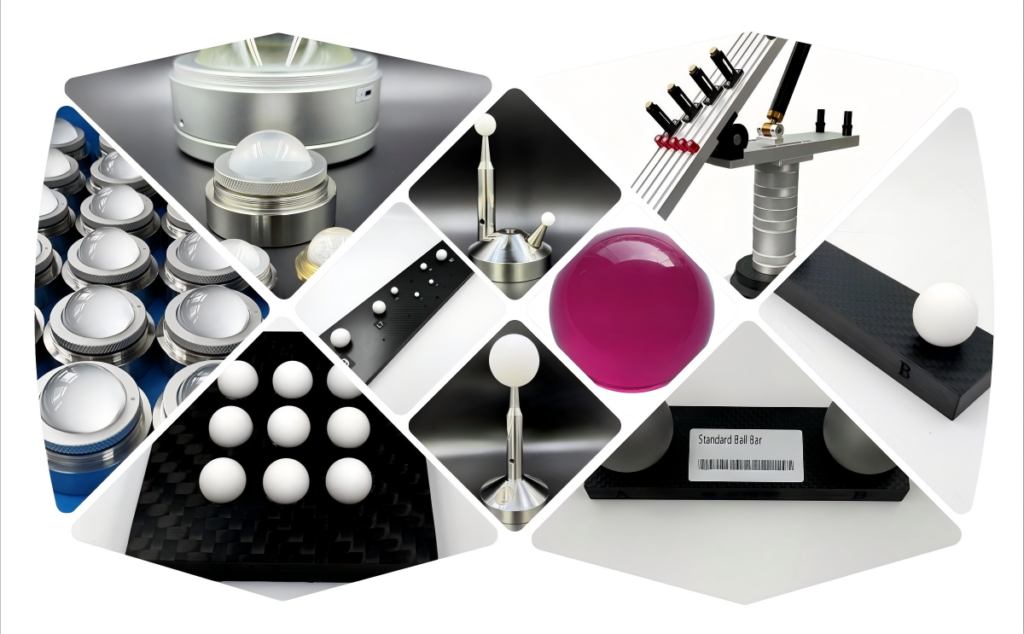
2. Use the right calibration artifact
Not all artifacts behave the same.
- Single sphere → good for local checks
- Ball bar → shows distance behavior
- Ball plate → shows full spatial distortion
If you are trying to reduce uncertainty, you need something that reflects your real measurement task.
3. Improve repeatability first
Before chasing better numbers, check this:
👉 Can you repeat the same result?
If not, look at:
- Fixture stability
- Probe condition
- Measurement path
Without repeatability, uncertainty will always be high.
4. Control temperature (more than you think)
Even small temperature differences matter.
Not just room temperature:
- Machine warming up
- Operator interaction
- Air movement
These can shift results more than expected.
5. Measurement strategy matters
Changing point distribution changes results.
Keep consistent:
- Number of points
- Probing speed
- Measurement sequence
Otherwise, you’re not comparing the same condition.
Final thought
Reducing uncertainty is not about improving one thing.
It’s about making everything behave consistently together.