

The common question from engineers and buyers
When purchasing calibration artifacts such as ball bars, ball plates, or reference spheres, one of the most frequent questions is:
“Why is the certified version significantly more expensive?”
At first glance, the geometry often looks identical.
But the difference is not in appearance.
It is in reliability.
What certification actually includes
A certified calibration artifact is not just a manufactured component.
It includes:
- traceable dimensional verification
- documented uncertainty values
- controlled manufacturing process
- material stability validation
- inspection under defined standards
Each of these steps adds cost but also reduces risk in measurement results.
Why uncertified artifacts create hidden risk
Uncertified artifacts may still appear precise.
However, without traceability, there is no guarantee that:
- sphere positions are stable
- distance values remain consistent
- material behavior is predictable over time
In practice, this uncertainty often shows up later as unexplained measurement drift.
Industrial CT considerations
In CT calibration environments, stability becomes even more critical.
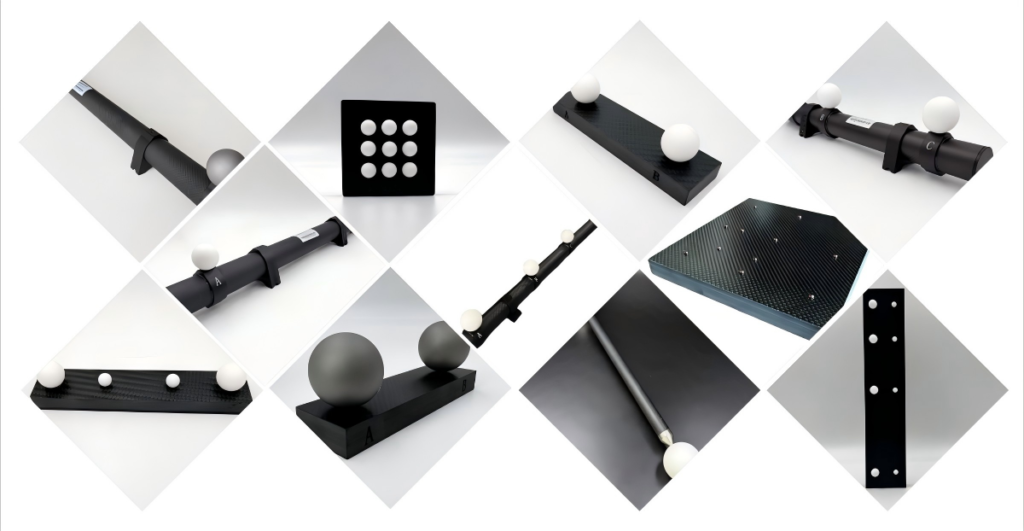
A Ruby Plate for CT System is often selected not only for geometry but also for long-term dimensional reliability under repeated scanning conditions.
Even small inconsistencies in reference geometry can lead to reconstruction errors that are difficult to trace back.
Engineering perspective
From a practical standpoint, certified artifacts reduce troubleshooting time.
When measurement problems occur, engineers can confidently eliminate the artifact as a source of error.
This alone often saves significant engineering effort in production environments.
Final thoughts
Certification is not about paperwork.
It is about reducing uncertainty in decision-making.
In metrology, confidence is often more valuable than absolute precision.