

A common but confusing problem in production environments
One of the most frequent issues in industrial metrology is that two CMM systems measuring the same part produce different results.
At first, this looks like a machine error.
But in most cases, the machines are not the real problem.
The inconsistency usually comes from differences in calibration strategy, artifact usage, or volumetric compensation models.
Different machines, different assumptions
Even if two CMM systems are from the same manufacturer, they may behave differently due to:
- calibration history
- probe system differences
- artifact selection
- software compensation models
- environmental conditions
This means that identical hardware does not guarantee identical results.
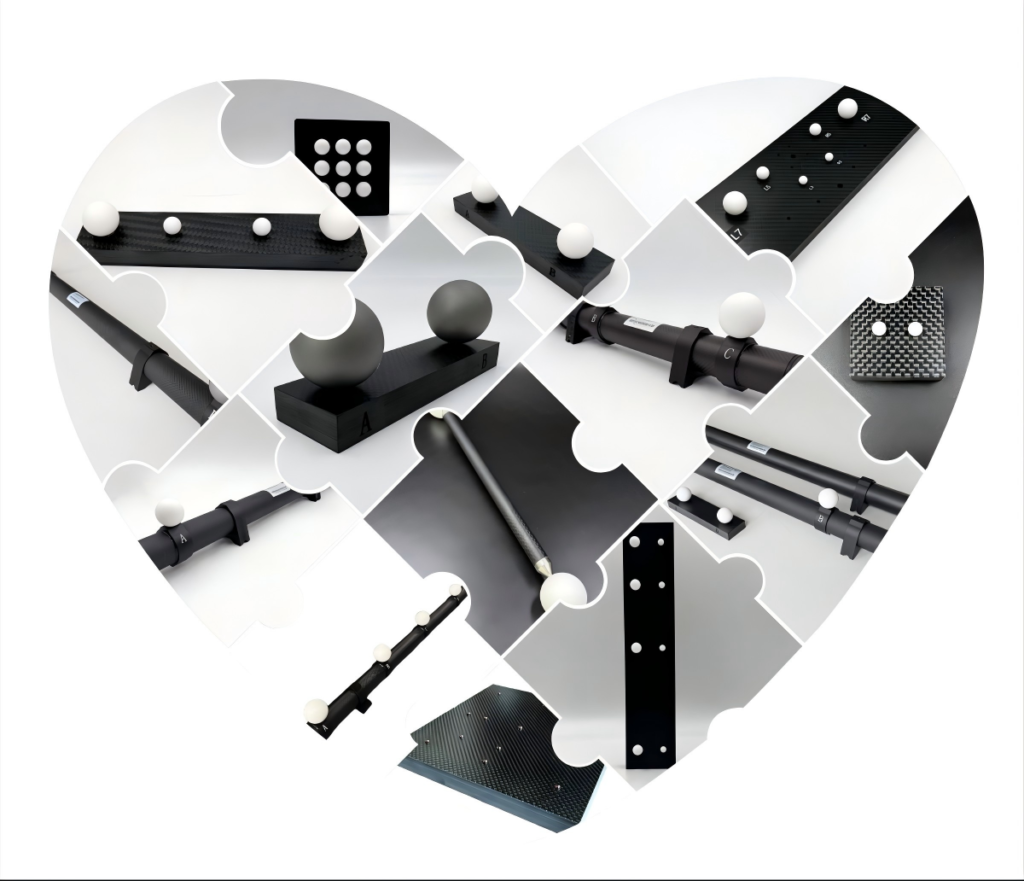
The role of calibration artifacts
Calibration artifacts are supposed to unify measurement behavior.
However, if different artifacts are used across machines, inconsistencies become inevitable.
For example:
- one system calibrated with a ball bar
- another calibrated with a ball plate
- a third using only reference spheres
These three systems will rarely produce identical volumetric behavior.
Why volumetric calibration matters more than machine brand
From experience, machine brand is often less important than calibration consistency.
Two different machines calibrated using the same strategy and artifact set often produce closer results than identical machines calibrated differently.
This is especially true in large-volume inspection environments.
Industrial CT comparison
In CT systems, differences become even more visible due to reconstruction dependency.
A stable reference artifact such as a Ruby Plate for CT System helps reduce cross-system variation by providing consistent volumetric reference geometry.
Without this, reconstruction differences can appear as machine errors.
Practical engineering observation
Most measurement disagreements are not hardware failures.
They are calibration alignment problems between systems.
Final thoughts
Consistency in calibration strategy is more important than machine consistency.
Without standardized artifact usage, cross-machine comparison becomes unreliable.