

tart with the practical question
Not every calibration artifact solves the same problem.
- Calibration balls – Good for local geometry checks, fast verification.
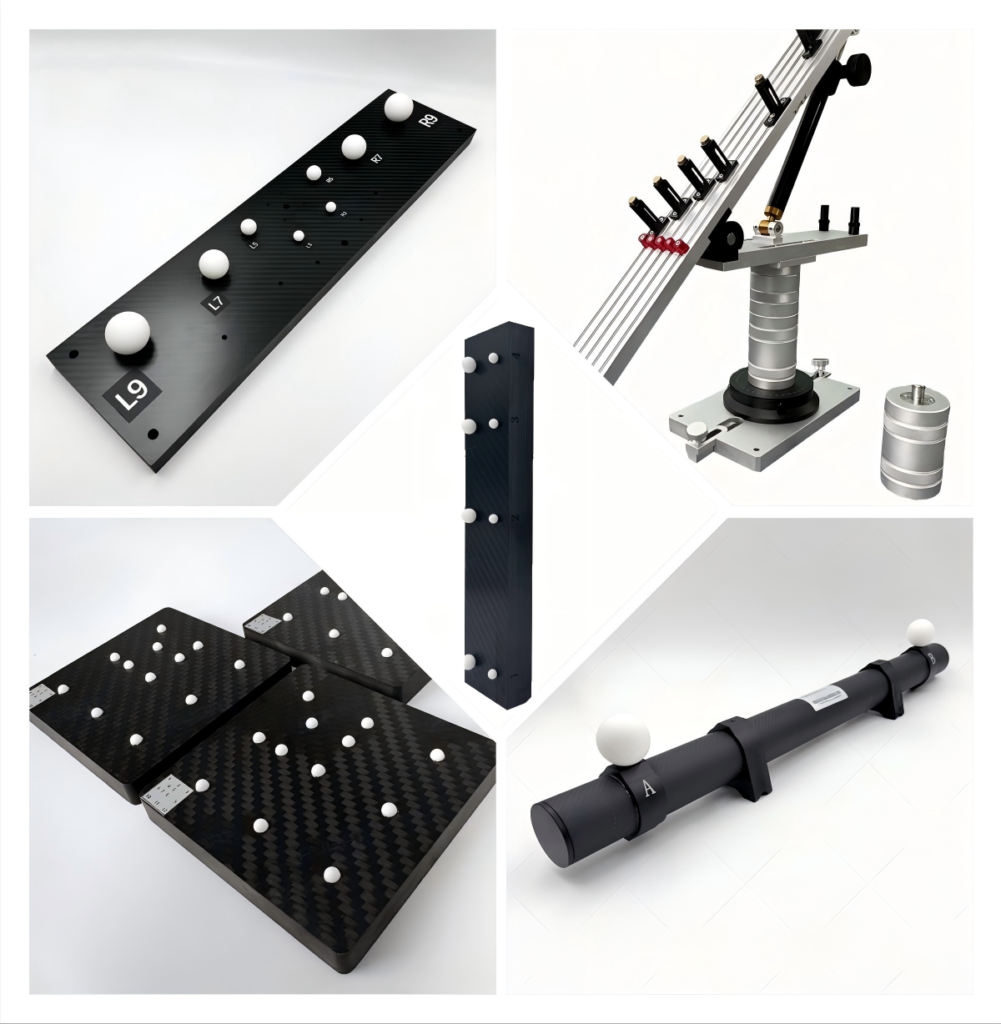
- Ball bars – Show distance consistency and alignment behavior.
- Ball plates – Evaluate full-field spatial performance.
Choosing the wrong one often creates more confusion than insight.
When to pick each
- Balls – Quick checks, small parts, CMM probing verification.
- Ball bars – Linear or multi-point measurements, mid-sized volumes.
- Ball plates – Large volumes, optical scanners, industrial CT systems. For example, a ruby plate for CT system can provide high stability over repeated scans, reducing reconstruction errors.
Real-world tip
More geometry isn’t always better. A ball plate with poor setup will introduce more variables, making interpretation harder.
Final thought
Pick the artifact based on what you want to check, not based on what looks “high-tech.” Repeatable results beat impressive specifications every time.