

Introduction
In modern industrial measurement, accuracy is everything. Whether in robotics, quality inspection, or 3D vision systems, even small measurement errors can lead to significant performance issues. This is where a Ball Bar plays a critical role.
A ball bar is a precision calibration tool designed to evaluate and verify the performance of 3D optical scanning systems. Compared to single reference artifacts, it provides more comprehensive insights into system accuracy.
What Is a Ball Bar?
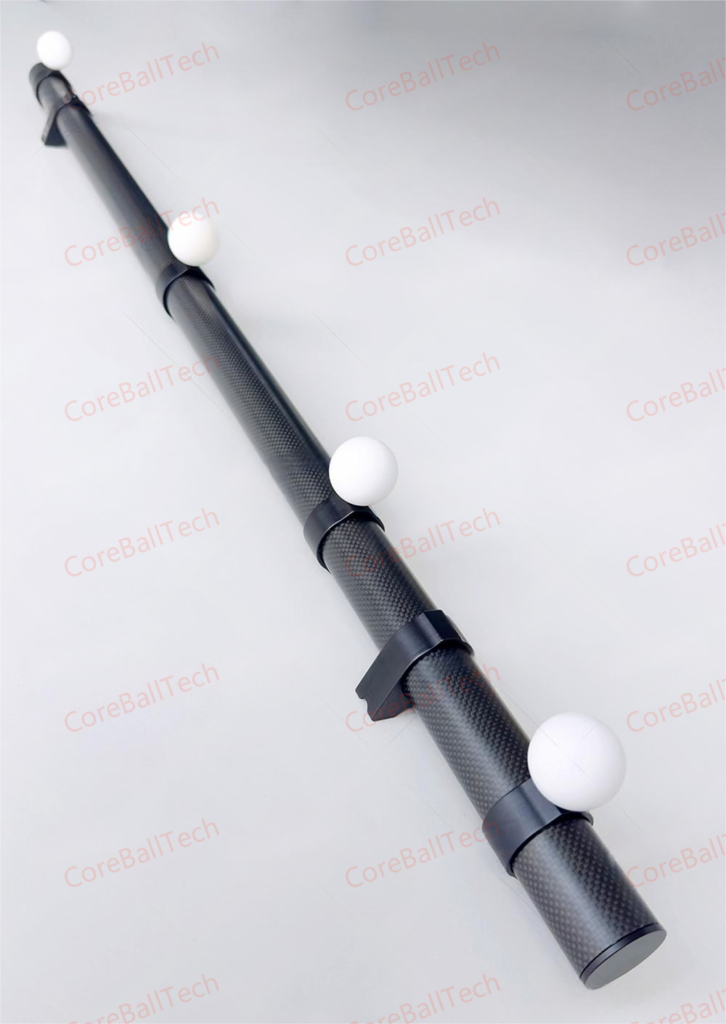
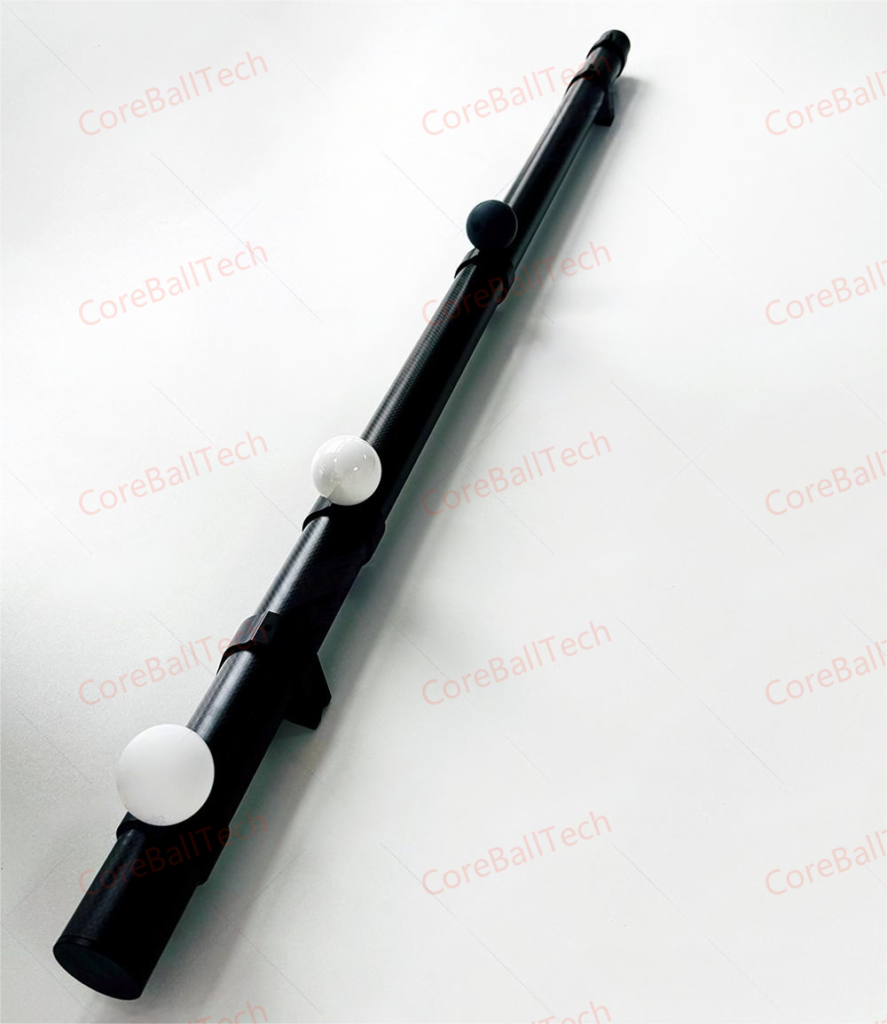
A Ball Bar is a calibration device consisting of multiple precision spheres mounted along a rigid bar. The spheres are typically made from ceramic or other stable materials and feature matte diffuse surfaces to ensure optimal detection by optical systems.
By measuring the distance between the sphere centers, a ball bar allows users to assess system accuracy across a defined length, making it ideal for large-volume measurement verification.
Key Advantages of Using a Ball Bar
1. Accurate Distance Error Evaluation
A ball bar enables precise measurement of the distance between spheres, allowing users to detect and quantify distance errors in 3D scanning systems.
2. Improved Measurement Accuracy
With high roundness spheres (better than 1/3 of system probing error), a ball bar ensures reliable calibration results and enhances overall measurement accuracy.
3. Repeatability and Stability Verification
Repeated measurements using a ball bar help evaluate system repeatability, which is essential for consistent industrial performance.
4. Positioning and Guidance Precision
Ball bars are widely used to validate positioning accuracy in robotic guidance and automation systems.
Technical Features of a High Precision Ball Bar
A high-quality ceramic Ball Bar typically includes:
- Sphere diameter ≥ 25 mm
- Roundness better than one-third of measurement system error
- Calibration uncertainty: U ≤ 5 μm (k=2)
- Matte diffuse ceramic spheres for optimal optical detection
- Standard lengths: 0.5 m, 1 m, 1.5 m, 2 m (customizable)
To ensure effective calibration, the ball bar length should be at least two-thirds of the diagonal length of the measurement volume.
Applications of Ball Bar Calibration
Ball bars are widely used across various high-precision industries:
- 3D optical scanning system calibration
- Industrial automation and robotics
- Quality inspection and metrology labs
- Medical imaging systems
- AR and VR vision systems
- 3D vision-guided positioning systems
They are especially suitable for large field-of-view systems (≥ 500 mm × 500 mm).
Why Choose a Ceramic Ball Bar?
Compared to metal alternatives, ceramic ball bars offer:
- Superior thermal stability
- Higher wear resistance
- Better surface consistency
- Longer service life
These advantages make them ideal for demanding industrial and laboratory environments.
Conclusion
A Ball Bar is more than just a calibration tool—it is a critical component for ensuring the accuracy, repeatability, and reliability of modern 3D measurement systems.
As industries continue to rely on precision data, investing in a high-quality ball bar is essential for maintaining measurement confidence and operational efficiency.
Call to Action
If you are looking for high precision ball bar solutions or customized calibration tools for your measurement system, feel free to contact us for professional support.